
Gezellig vs hygge: what really separates the Dutch and the Danes — and how internationals get into the circle
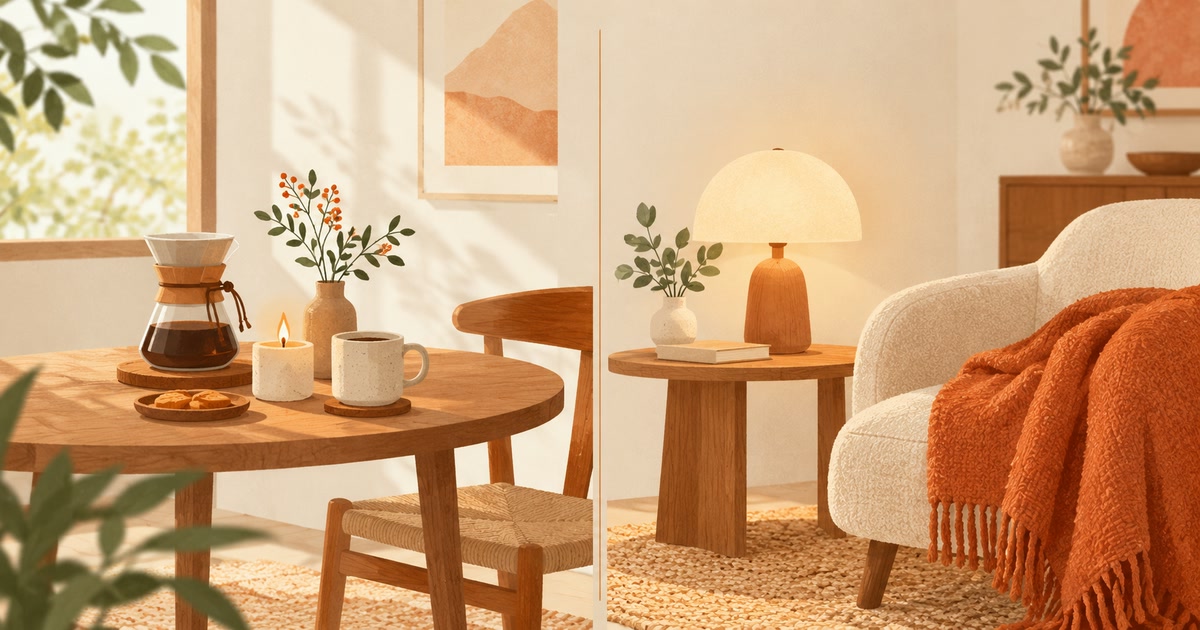
Live in the Netherlands for any length of time and you will run into gezellig (roughly "kheh-ZEL-ikh"). Dictionaries say "cosy" or "convivial", but in practice it is used far more widely — about people, places, events and moments.
A good way into the concept is a comparison piece on DutchReview by a Dane living in The Hague, who sets the Netherlands against her home country and its famous hygge.
Below we start from that piece and add DutchReview, IamExpat and Expatica on Dutch culture, the World Happiness Report as covered by NL Times and DutchNews, loneliness statistics from Statistics Netherlands (CBS), and advice on social life from The Hague International Centre and ACCESS — to sketch what gezellig really is, and how internationals get into the circle.
Main sources for this article
- DutchReview, "'Gezellig' or 'hygge'? The real differences between the Netherlands and Denmark" (the starting point)
- DutchReview, "Gezellig: an essential Dutch concept" (origins and usage)
- CBS, "1 op de 10 mensen voelt zich sterk eenzaam; al 5 jaar stabiel" (September 2026, loneliness statistics)
- NL Times, "Netherlands drops to 7th place in 2026 World Happiness Report" (March 2026)
| What this article answers | Short answer |
|---|---|
| What does gezellig mean? | From gezel, "companion"; used for people, places, events and time (sections 1–2) |
| How is it different from hygge? | Whether it works for time alone (section 3) |
| How do the Dutch and Danes differ? | How they cycle, how direct they are, bread, landscape (section 4) |
| Which is happier? | Denmark 3rd, the Netherlands 7th in 2026 (section 5) |
| Can internationals get in? | People born abroad feel socially lonely twice as often; go where the circles are (sections 6 and 10) |
1. What gezellig means
It comes from "companion"
According to DutchReview, gezellig comes from gezel — friend or companion. In the old guild system a gezel was a journeyman working under a master, and from that came the sense of belonging. At its root is being with others.
The same article describes gezellig as "a state of cosiness and togetherness". English has nothing exact: cosiness and togetherness each cover part of it.
What it is used for
IamExpat calls gezellig the cosiest of all Dutch words and needs a string of English adjectives to pin it down: enjoyable, pleasant, entertaining, sociable, companionable, convivial. Expatica's expat guide notes that everything from an evening out to a supermarket gets judged on how gezellig it is.
DutchReview's examples, sorted by what they describe:
| Describes | Example |
|---|---|
| A place | A canal-side terrace after work |
| An event | Friends getting together; a table-top grill dinner (gourmetten) |
| People and pets | The cat that greets you after a long day |
| Everyday scenes | Wine, fairy lights and records with friends; bread and cheese on a rainy day |
| Time | An evening together; a rainy afternoon |
2. The words around gezellig
Gezellig is easier to grasp alongside its neighbours.
| Word | Meaning | Notes |
|---|---|---|
| gezelligheid | The state of being gezellig (noun) | "Gezelligheid kent geen tijd" — good company knows no time |
| ongezellig | Unwelcoming, unpleasant | Office politics; no charger free in a packed café |
| gemoedelijkheid | Close to German Gemütlichkeit | The Dutch take on easy comfort |
| lekker | Tasty, nice | Not interchangeable with gezellig |
| borrel | Informal drinks, often after work | Beer, bitterballen, a bit of networking |
| natafelen | Staying at the table after the meal | Enjoying the company and conversation |
| Oost west, thuis best | East, west, home is best | The value placed on home and comfort |
On ongezellig, DutchReview jokes that if a Dutch person calls something ongezellig, you should "run for your life". It is a strong rejection of a person or a situation.
And lekker is not gezellig: the food is lekker; the time around the table is gezellig.
3. How it differs from hygge
Can you be gezellig on your own?
Hygge, the Danish word, means comfort and wellbeing. DutchReview names it the closest foreign equivalent of gezellig. But there is one big difference: hygge works for time alone. A night under a blanket with a book is hygge; in Dutch you would hardly call it gezellig.
| Situation | gezellig | hygge |
|---|---|---|
| Friends getting together | ◎ very common | ◎ very common |
| A night alone with a book | △ odd | ◎ classic |
| The atmosphere of a café or street | ◎ "gezellige kroeg" | ○ fine |
| A person | ◎ "gezellige man" | △ odd |
| Saying goodbye | ◎ "Het was gezellig" | ○ fine |
Whether it can describe a person is another clear difference. In Dutch you can say someone is gezellig: good company, someone who makes things relaxed.
Where each word reaches
Mapped against two questions — alone or together, at home or out — the two words cover different ground.
The overlap is time with others at home, where either word works. Gezellig stretches outward into cafés and parties; hygge stretches towards time on your own.
4. What separates the Dutch and the Danes
Now to the DutchReview piece itself. The author describes the Netherlands as "different enough to be interesting, but similar enough to feel comfortable" compared with Denmark.
Cycling: similar amounts, different style
Both are cycling nations, but the author notes they cycle differently. The Copenhagenize Global Bicycle Cities Index includes cyclists' respect for traffic law as an indicator, and Copenhagen scores higher than Amsterdam on it.
In Copenhagen, she writes, cyclists wear helmets and stop at red lights. In the Netherlands, wearing a helmet can earn you comments questioning your cycling skills.
What about the amount of cycling? Here are the numbers.
Nationally, 28% of all trips in the Netherlands are by bike (8 points of that by e-bike), and close to 50% in some cities. DutchReview notes there are more bikes than people. Copenhagen's figures are for commuting within the city only, ranging from 41% to 49% depending on the year.
So "which is the cycling nation?" depends on what you measure. All trips nationally: the Netherlands. City commuting: Copenhagen. The author's point is less about quantity than style.
Directness: "direct but warm" vs "polite but cold-ish"
Dutch directness is famous. Expatica puts it simply: they say what they think, which helps newcomers know where they stand.
The author's comparison: "the Dutch are direct but warm, whilst the Danish are polite but cold-ish." Danes are cooler on first meeting and take time to warm up, though happy to help if you stop them. She wonders whether it is introversion — or the weather.
Guides for internationals connect Dutch directness with egalitarianism. Expatica notes the relatively flat hierarchy in Dutch companies, an expression of the country's social egalitarianism: speaking your mind regardless of rank and being direct come from the same place. Another trait those guides agree on is punctuality — less "important" than "a way of life".
Bread: boterham vs smørrebrød
Lunch tells the story too. The Dutch staple is the boterham: a slice of brown bread with butter and cheese. Denmark has smørrebrød, open sandwiches on rye with all kinds of toppings, increasingly treated as a craft. Rye bread is what the author misses most from home.
Landscape: flat, but…
Both countries are flat, though the author insists Denmark has a few "hills". Denmark's famous Himmelbjerget is 147 metres. The Netherlands' highest point, the Vaalserberg at 322.7 metres where the Dutch, Belgian and German borders meet, is technically, as she puts it, only a hill.
| Netherlands | Denmark | |
|---|---|---|
| Cycling | Lots of it; few helmets; fast | Rule-abiding; helmets normal |
| Directness | Direct but warm | Polite but cold-ish; slow to warm up |
| Lunch | Boterham (brown bread, butter, cheese) | Smørrebrød (open sandwiches on rye) |
| Landscape | Very flat; highest point a 322.7 m hill | Flat with "hills"; Himmelbjerget 147 m |
| Word for comfort | Gezellig (people and places) | Hygge (time and atmosphere) |
5. Happiness: close neighbours in the rankings
Denmark 3rd, the Netherlands 7th in 2026
Another place the two countries meet is the World Happiness Report. According to NL Times, the 2026 edition put Denmark third and the Netherlands seventh.
| Edition | Netherlands' rank | Source |
|---|---|---|
| 2024 | 6th | NL Times |
| 2025 | 5th | NL Times |
| 2026 | 7th (lowest yet) | NL Times, IamExpat |
What it measures
The ranking is based on how respondents rate their own lives on a scale of 0 to 10 — not "how good the country is", but how residents see their own lives.
The 2026 edition's special theme was social media and young people's wellbeing. NL Times reports that the Netherlands is among the countries where the negative link between problematic social media use and teenagers' mental health is strongest. DutchNews also cites social media as a factor in the decline.
Reading the gap as a cultural verdict would be a stretch. But both countries sitting near the top fits the author's sense that they are "similar enough to feel comfortable".
6. Loneliness in the land of gezellig
One in ten feel strongly lonely
Here is the other side of gezellig. CBS figures published in September 2026 show that in 2025, 10.1% of people aged 15 and over felt strongly lonely and 29.7% somewhat lonely. The share feeling strongly lonely has been around 10% for five years.
| Year | Strongly lonely | Somewhat lonely | Not lonely |
|---|---|---|---|
| 2019 | 8.7% | 25.7% | 65.6% |
| 2021 | 11.0% | 31.5% | 57.5% |
| 2023 | 10.8% | 28.6% | 60.6% |
| 2025 | 10.1% | 29.7% | 60.2% |
By age, strong loneliness was highest among 35–45-year-olds (13%) and 45–55-year-olds (12%).
People born abroad are twice as likely to feel socially lonely
For internationals, the breakdown by origin stands out. CBS distinguishes social loneliness — not having enough people you feel connected to and can rely on — from emotional loneliness, a sense of emptiness or of missing someone.
In 2025, 24.1% of people born outside Europe and 26.7% of people born elsewhere in Europe felt strongly socially lonely, about twice the rate among people born in the Netherlands to Dutch-born parents (13.0%). CBS says the gap is not explained by differences in income, age or education.
| Origin | Strongly lonely | Strongly socially lonely | Strongly emotionally lonely |
|---|---|---|---|
| Born outside Europe | 17.5% | 24.1% | 16.3% |
| Born elsewhere in Europe | 15.8% | 26.7% | 13.5% |
| Born in NL, parents from outside Europe | 9.5% | 14.4% | 10.6% |
| Born in NL, parents born in NL | 8.6% | 13.0% | 8.8% |
Notice that the gap in social loneliness is wider than in emotional loneliness. Arriving with a partner or family protects against emotional loneliness, but "nobody nearby I can rely on" tends to remain — a pattern familiar to many who move here for work.
And people born in the Netherlands to parents from outside Europe are almost at the level of those with Dutch-born parents. Put down roots over time, and the gap narrows.
The circle is hard to see from outside
DutchReview's gezellig article has a telling anecdote: the author's university held borrels, but they were cancelled because so few international students came — the conversation was in Dutch, and internationals found it hard to join. The article also notes that Dutch people may not speak English or include internationals in the conversation.
Gezellig is a warm word for those inside. But the inside is made of gezellen — companions — and newcomers are not automatically let in. The loneliness figures are hard to separate from that.
7. Time inside the circle: birthdays, borrels, natafelen
The birthday circle (verjaardagskring)
The custom that surprises newcomers most is the birthday party. Combining DutchReview's and Expatica's descriptions:
| Custom | What happens |
|---|---|
| Sitting in a circle | Chairs arranged in a ring in the living room; long conversations |
| Congratulating everyone | "Gefeliciteerd" not just to the birthday person but to family and friends too |
| Even strangers | Said to people you have never met, so it can sound like introductions |
| Presents | Often opened in front of everyone |
| Birthday calendar | Often hanging in the toilet, to keep track of whose birthday is when |
Not every Dutch person does it: commenters on DutchReview say they only congratulate the birthday person, and one says they have not congratulated everyone once in 43 years. It varies by region and generation.
Borrels and natafelen
A borrel is informal drinks, often after work, with beer, bitterballen and some networking. Natafelen is staying at the table after the meal to keep talking. Both are about being together rather than doing something — gezellig in its natural habitat.
8. Directness and gezelligheid go together
Newcomers sometimes wonder how a culture known for bluntness can also prize cosy togetherness.
That is exactly the interesting part: directness and gezelligheid do not conflict. A table where people speak their minds and still enjoy each other's company is gezellig. The author's "direct but warm" says the same.
The Dutch sayings IamExpat collects show the same temperament:
| Saying | Literally | What it reflects |
|---|---|---|
| Gezelligheid kent geen tijd | Cosiness knows no time | Valuing time together for its own sake |
| Oost west, thuis best | East, west, home is best | Home and comfort come first |
| Meten is weten | Measuring is knowing | Facts and evidence over gut feeling |
| Zuinigheid met vlijt | Thrift with diligence | Frugal and hard-working — but not stingy |
| Haastige spoed is zelden goed | Haste is rarely good | Do things carefully, without rushing |
Saying things as they are (meten is weten) and treasuring time together (gezelligheid kent geen tijd) sit side by side in the same culture.
9. Gezellig vs "cosy"
English speakers often reach for "cosy", but the fit is loose.
| English "cosy" | Dutch gezellig | |
|---|---|---|
| Core idea | Physical warmth and comfort | Being together, a pleasant atmosphere |
| Alone | Fine ("a cosy night in") | Odd (hygge territory) |
| About a person | Unusual | Normal: "a gezellig person" |
| A busy party | Rarely "cosy" | Very gezellig |
| Opposite | Uncomfortable, cold | Ongezellig (a strong rejection) |
The difference matters more than it looks. "Cosy" is about comfort; gezellig is about company. A noisy birthday with twenty people is not cosy, but it can be very gezellig.
10. Getting into the circle (The Hague)
Find a place you go to every week
After those loneliness figures, the question is how to get in. ACCESS Netherlands recommends joining a sports team, a course or a club as a first step, chatting with other parents if your children are at school, and baby groups if you have a baby.
The Hague has many groups you can join in English. Examples listed by The Hague International Centre and IamExpat:
| Type | Example | What it offers |
|---|---|---|
| Networking | InterNations The Hague | Events and groups for internationals |
| Small-group socials | Bezuidenhout Social Club | Shared meals, workshops; from small talk to real conversation |
| Improv | ImproNation | English-language improv for internationals and locals |
| Choir | Cecilia International Choir | All nationalities and ages |
| Running | The Hague Hash House Harriers | Weekly social running club |
| Theatre | AATG | English-language amateur theatre |
| Newcomer events | The Hague International Centre meet-ups | Events for people who have just arrived |
Some listings are a few years old, so check that a group is still active before you go.
Joining Dutch circles
Beyond international groups, if you want to get into Dutch circles, using some Dutch and turning up at the same place regularly both help. Becoming a gezel means spending time together repeatedly. Local sports clubs and hobby groups exist for exactly that.
11. Three ways to use it
The fastest way to learn the word is to use it.
| Phrase | When | Meaning |
|---|---|---|
| Wat gezellig! | During a get-together, or when invited | "How nice!" |
| Het was gezellig. | When saying goodbye | "It was lovely" — natural as a pleasantry too |
| een gezellige kroeg | About a place | "A cosy pub" |
| Gefeliciteerd! | At a birthday, to the host and everyone else | "Congratulations!" |
What you do not call gezellig: working alone or waiting in silence. Avoid those and you will rarely misuse it.
12. Two situations (fictional)
These examples are fictional, to make the scenes concrete.
A: Invited to a colleague's birthday
A Dutch colleague invites you home for their birthday. The chairs are in a circle.
Say "Gefeliciteerd" to the colleague, then to their family. You will be sitting and talking for a while, so have a few topics ready — work, hobbies, holidays. On the way out, "Het was gezellig" is all you need.
B: Six months in and no friends yet
A trailing partner spends most days alone and has not yet found a social circle.
Start with an English-language choir or course on the same day every week. As the CBS figures show, social loneliness is common in the first period after moving. One place where you see the same people regularly changes a lot.
| Situation | Setting | What helps |
|---|---|---|
| A: colleague's birthday | Birthday circle | "Gefeliciteerd" to everyone; have topics ready |
| B: no friends yet | Local groups | Go to the same place every week |
13. What not to do
| Don't | Why |
|---|---|
| Learn gezellig as a single translated word | It covers too much; learn it by scene |
| Take directness as coldness | Direct and warm go together |
| Call a quiet solo moment gezellig | That is hygge territory |
| Wait to be invited in | People born abroad are lonelier; find a place to go |
| Read the happiness ranking as a verdict on a country | It is residents rating their own lives |
14. Summary
- Gezellig comes from gezel, "companion": it leans towards people and places, and can describe a person
- Hygge works for time alone — the biggest difference
- The Dutch and Danes are alike in bikes and bread, different in cycling style and degree of directness
- In the 2026 World Happiness Report, Denmark was 3rd and the Netherlands 7th, its lowest yet
- CBS: people born abroad are about twice as likely to feel strongly socially lonely; the circle is hard to enter from outside
- The shortcut in is a club, choir or course you attend every week
Sources
Official and statistics
- 1 op de 10 mensen voelt zich sterk eenzaam; al 5 jaar stabiel — CBS: loneliness 2019–2025, by age and by origin
- Fietsfeiten 2023 — KiM Netherlands Institute for Transport Policy Analysis: cycling share (28% of trips, 8 points by e-bike), based on CBS ODiN 2022
- World Happiness Report 2026: the 2026 edition and its theme
Media and guides
- 'Gezellig' or 'hygge'? The real differences between the Netherlands and Denmark — DutchReview: the starting point — cycling, directness, bread, landscape
- Gezellig: an essential Dutch concept — DutchReview: origins, usage, ongezellig, borrels, the cancelled-borrel anecdote
- "Verjaardagskring": A guide to surviving the circle of death at Dutch birthday parties — DutchReview: the birthday circle
- Dutch Quirk #39: Say happy birthday to everyone — DutchReview: congratulating everyone, and Dutch objections
- 5 Dutch expressions that express the Dutch way of life — IamExpat: Dutch sayings and values
- The comfort of gezelligheid and other Dutch autumnal words — IamExpat: gezelligheid explained
- The Netherlands ranked 7th-happiest country in the world, down two positions — IamExpat: the 2026 ranking
- Groups & clubs in The Hague — IamExpat: groups in The Hague
- 10 cool Dutch words that have no English translation — Expatica: untranslatable Dutch words
- Expat life in the Netherlands: 10 questions answered — Expatica: directness and egalitarianism
- The Dutch circle party: a guide for confused foreigners — Expatica: the birthday circle
- Netherlands drops to 7th place in 2026 World Happiness Report; Lowest position yet — NL Times: top ranks, past Dutch ranks, social media
- Dutch drop in World Happiness ranking, social media aid decline — DutchNews.nl: the decline and social media
- 1 in 10 adults in the Netherlands feel severely lonely — NL Times: reporting on CBS loneliness figures
- Expat groups and clubs — ACCESS Netherlands: sports, courses and clubs as a way in
- Clubs and networks — The Hague International Centre: international clubs and networks in The Hague
- Copenhagen Plans Greater Restrictions On Car Use As Cycling Surges To 49% Of Commuter Journeys — Camden Cyclists: Copenhagen commuting share
Cycling figures come from different years, and happiness rankings change annually. Group listings may be dated. All checked on 18 October 2026.
Original article
'Gezellig' or 'hygge'? The real differences between the Netherlands and Denmark — DutchReview
FAQ
- What does gezellig mean?
- Dictionaries give 'cosy' or 'convivial', but it is used for people, places, events and moments. It comes from gezel, meaning companion, and describes the atmosphere of being together. Its opposite, ongezellig, means unwelcoming or unpleasant.
- How is it different from hygge?
- Hygge, the Danish word, also works for time alone — a blanket and a book. Gezellig leans towards people and places; hygge towards time and atmosphere. DutchReview names hygge as the closest foreign equivalent to gezellig.
- How do I use gezellig?
- During a get-together, 'Wat gezellig!' (how nice); when saying goodbye, 'Het was gezellig' (it was lovely). It is a comment on the time you spent together, so it works as a friendly pleasantry too.
- Which country is happier, the Netherlands or Denmark?
- In the 2026 World Happiness Report, Denmark ranked third and the Netherlands seventh — down from fifth the year before and its lowest position yet. The ranking reflects how residents rate their own lives on a scale of 0 to 10.
- How do internationals make friends in the Netherlands?
- Joining a sports team, a course or a club is the usual way in. In The Hague there are English-speaking choirs, improv groups, running clubs and social meet-ups. If you have children, chatting with other parents at school is another route.
Source: DutchReview
Planning a site that has to work in both markets?
Get in touch