
Renting in the Netherlands in 2026: the odd-but-legal landlord habits, and the rules that protect tenants
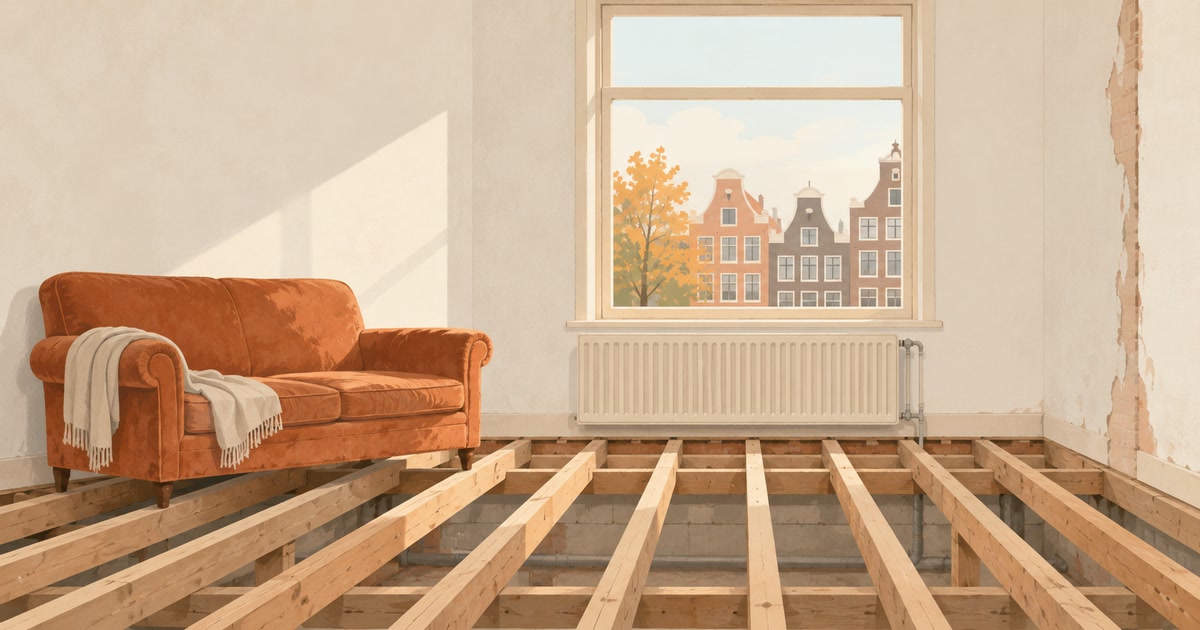
If you have rented a home in the Netherlands, you have probably had at least one "wait, is that allowed?" moment.
This article starts from DutchReview's piece on five weird-but-legal things Dutch landlords do. Reading it, we found ourselves nodding along — and also thinking that the rules that protect tenants, which the piece does not cover, matter even more to internationals.
So below we go through the five customs, then add what Expatica, IamExpat, Xpat.nl and The Hague International Centre explain about tenant rights, what NL Times and DutchNews report about the 2026 market, and what the Dutch government and the Huurcommissie (the rent tribunal) publish. The aim: everything you should know before and after you sign a Dutch lease.
Main sources for this article
- DutchReview, "5 weird things Dutch landlords do that are somehow completely legal" (the starting point)
- Expatica, "Tenant rights in the Netherlands" (deposits, notice periods, service charges)
- Dutch government announcements on rent-increase caps and fixed-term contracts; the Huurcommissie's rent check
- NL Times and DutchNews on the 2026 rental market (Kadaster, Pararius data)
| What this article answers | Short answer |
|---|---|
| What is happening in the rental market? | Private landlords are selling; fewer homes, higher rents (section 1) |
| Why would a flat have no floor? | Unfurnished rentals are bare shells by custom (section 3) |
| What protects tenants? | Points-based maximum rents, deposit cap, letting-fee ban, permanent contracts |
| How do I check my rent? | Score it with the huurprijscheck; act within six months (sections 5–6) |
| Where can I get help? | In The Hague: the Fair Rent Team, the rental helpdesk, the Huurcommissie (section 13) |
1. What is happening in the Dutch rental market
Private landlords are selling up
Before the customs, some context. Over the past two years, stronger tenant protection has pushed many private landlords to sell their rental homes.
According to Kadaster (Land Registry) figures reported by NL Times, private landlords sold around 65,000 rental homes in 2025, while investors bought around 27,000 new-build rentals. The private rental stock has fallen to about 752,000 homes, 9% of all housing.
Rents are rising, and expensive homes take a bigger share
Less supply means higher prices for what remains. Research by rental platforms Pararius and Huurwoningen.nl, reported by DutchNews in July 2026, found that average rent per square metre rose 4.7% in a year, and homes renting for over €2,000 a month now make up 41% of the market (up from 38.8%).
NL Times reports the national housing shortage at around 410,000 homes (February 2026). For newcomers, the market is not in your favour.
The rules are set to loosen in 2027
In April 2026 the government announced plans to ease rent controls from 1 January 2027. NL Times reports the changes would let landlords charge more for expensive homes, new builds and units without a garden or balcony. Still, in a survey of more than 1,100 landlords by landlord association Vastgoed Belang, almost four in five said they would keep selling regardless.
| Indicator | Figure | Source |
|---|---|---|
| Rental homes sold by private landlords (2025) | about 65,000 | Kadaster (NL Times) |
| Private rental stock | about 752,000 (9% of housing) | Kadaster (NL Times) |
| Average rent per m², year on year | +4.7% | Pararius, Huurwoningen.nl (DutchNews) |
| Share of rentals above €2,000/month | 41% (was 38.8%) | as above |
| Housing shortage | about 410,000 homes | NL Times |
2. How the rules changed, 2023–2027
Dutch rental rules have changed a lot in a short time, and older guides can be misleading. Here is the timeline.
| When | Change | What it means for tenants |
|---|---|---|
| 1 July 2023 | Good Landlordship Act (Wet goed verhuurderschap) | Deposits capped at two months' rent; written contracts, no discrimination, transparent service charges; municipal enforcement |
| 1 July 2024 | Permanent Rental Contracts Act (Wet vaste huurcontracten) | New contracts are permanent by default; fixed terms only for specific groups |
| 1 July 2024 | Affordable Rent Act (Wet betaalbare huur) | Maximum rents extended to mid-rent homes (144–186 points) |
| 2026 | Rent-increase caps: social 4.1%, mid 6.1%, free sector 4.4% | Annual increases are capped |
| 1 January 2027 (planned) | Partial easing of rent controls | Rents may rise for expensive and new-build homes |
3. Five odd-but-legal habits
Here are DutchReview's five, with background and what to do about each. As the original piece points out, clearly illegal practices are a different matter; these are the legal-but-baffling ones.
No floor
The most startling one: you move into a flat you viewed, and the floor covering is gone.
The reason is that Dutch rentals come in levels of finish. Xpat.nl describes them like this:
| Type | Includes | Does not include |
|---|---|---|
| ongemeubileerd (unfurnished) | The bare shell | Floor coverings, curtains, light fittings, wall finishes, appliances |
| gestoffeerd (semi-furnished) | Floors, walls, curtains, lights, kitchen with appliances | Furniture |
| gemeubileerd (furnished) | All of the above plus furniture, linen, kitchenware | — |
Unfurnished means no floor is the norm. If the previous tenant put in a floor and takes it with them, the next tenant gets concrete. Xpat.nl's advice: never assume the furnishings you saw at the viewing will still be there when you move in.
Check which level the contract states, and get in writing whether the floor stays or goes. Putting in a floor yourself can cost several hundred to over a thousand euros.
Buying the previous tenant's furniture
You may be asked to take over (overname) the previous tenant's furniture or floor as a condition of getting the flat. If both sides agree, it is legal.
The problem is when it is presented as non-negotiable: accept, or the flat goes to someone else. Xpat.nl recommends making any takeover formal and signed. Ask for an itemised list with prices, and keep it separate from the rental contract, so that part of the rent cannot be disguised as a furniture payment.
A two-month deposit
The deposit (waarborgsom) for contracts signed from July 2023 is capped at two months' basic rent, excluding service charges. Older contracts allowed up to three months, so you may still be quoted old figures. See section 8.
Small repairs are the tenant's job
The Dutch "minor repairs" decree (Besluit kleine herstellingen) sets out which repairs fall to the tenant. Combining Xpat.nl's and Expatica's explanations:
| Tenant | Landlord |
|---|---|
| Replacing light bulbs | Heating and boiler breakdowns |
| Fixing door handles and doorbells | Water and drainage systems |
| Descaling taps | Electrical installations |
| Unblocking drains | Exterior painting and the building envelope |
| Cleaning gutters (depending on the contract) | Structural defects, leaks, causes of mould |
Serious defects — no heating, leaks, mould — are the landlord's responsibility. If they are not fixed, you can ask the Huurcommissie for a temporary rent reduction. In The Hague, the Fair Rent Team visits homes with overdue maintenance to assess this.
Leaving when the owner comes back
Owners going abroad for a while sometimes rent out their home in the meantime — tussenhuur, often via a "diplomat clause". Xpat.nl advises checking whether your contract contains one.
Under this arrangement, the government explains, you leave when the owner returns. Find out before you buy furniture. General fixed-term rules are covered in section 9.
4. Before you sign
Can you register at the address?
In the Netherlands you must register with the municipality (the BRP) at the address where you live. As Xpat.nl notes, local taxes are tied to that address, and so is almost everything else: your BSN, DigiD, allowances and insurance.
Some landlords say registration is not possible. Living somewhere you cannot register means no allowances, stalled paperwork, and possibly being told to leave if the municipality finds out. Ask at the viewing: "Kan ik me inschrijven op dit adres?" — can I register at this address?
What landlords are required to do
The 2023 Good Landlordship Act places duties on landlords and agents:
| Landlord or agent must | What to check |
|---|---|
| Put the contract in writing | Never move in on a verbal agreement |
| Give tenants key information in writing | Deposit, service charges, emergency contact |
| Keep service charges at cost | A breakdown and an annual settlement |
| Not discriminate | You are not rejected for your nationality |
| Not intimidate | You are not pressured to leave for complaining |
Municipalities can fine landlords who break the rules. Expatica also notes that rejecting tenants on grounds of nationality, race, religion or other protected characteristics is prohibited.
"Furnished, so it must be temporary"?
DutchReview's 2026 piece on flexible contracts in Amsterdam looks at how many furnished expat rentals come with short contracts. But since July 2024, new contracts are permanent by default. "Furnished" is not an exemption. If a contract is fixed-term, ask which exception it relies on.
5. The points system and maximum rents
Now to the rules on your side. At their centre is the points system (woningwaarderingsstelsel, WWS).
Size, facilities, energy label, property valuation (WOZ) and more are scored, and the total determines the maximum legal rent. The points bands also divide homes into three segments.
In other words, if you count your home's points, you can tell whether your rent is legal. Since the mid-rent band became regulated, many homes once considered "free market" are now subject to a maximum.
6. Checking whether your rent is too high
Score your home with the rent check
The Huurcommissie publishes a free huurprijscheck (rent check), also in English.
- Open the huurprijscheck on huurcommissie.nl
- Choose the type of home (self-contained home, room, or mobile home)
- Enter floor area, facilities, energy label and so on
- You get a points total and the corresponding maximum rent
Go to the Huurcommissie
If your rent is above the maximum, you can ask the Huurcommissie to lower it. Expatica puts the fee at around €25, refunded if you win, and the decisions are legally binding.
The deadline matters: within six months of the start of your contract you can have your initial rent assessed. After that it gets harder, so score your home in your first months.
In The Hague, the Fair Rent Team helps
The Hague's Fair Rent Team (Huurteam) helps residents registered in the city who rent from a private landlord:
| Help offered | Conditions |
|---|---|
| Calculating points to see if the rent is fair | In the first six months, whatever the rent |
| Rent assessment after six months | If basic rent is below €932.93 a month |
| Help with Huurcommissie procedures | — |
| Home visits for overdue maintenance | To see if a temporary rent reduction applies |
Counting points takes time when you are new to it. Having the municipality help you, in English, is a real advantage.
7. Annual rent increases are capped
For sitting tenants, the yearly increase matters most. The 2026 caps depend on the segment.
| Segment | 2026 cap | How it is set | Period |
|---|---|---|---|
| Social housing | 4.1% | Average inflation over three years + 0.5 point | 1 July 2026 – 1 July 2027 |
| Mid-rent | 6.1% | Collective-agreement wage growth (5.1%) + 1 point | From 1 January 2026 |
| Free sector | 4.4% | Statutory cap, in place until 1 May 2029 | 1 January 2026 – 1 January 2027 |
A free-sector increase also requires a rent-increase clause in your contract; without one, a one-sided increase is generally not allowed. Expatica notes that notice of an increase must reach you at least two months in advance.
8. Deposits: the cap and the return deadline
The current rules
| Item | Contracts from 1 July 2023 | Older contracts |
|---|---|---|
| Maximum | Two months' basic rent | One to three months was common |
| Return (no damage) | Within 14 days of the end of the tenancy | Per contract |
| Return (with settlement) | Within 30 days | Per contract |
| If not returned | The tenant must take legal action | Same |
On a rent of €1,400, for example, the deposit cap is €2,800.
Deposits still go missing
IamExpat reported on the tenants' organisation !WOON's report De staat van de huurder 2025 (March 2026): 203 reports of unreturned or partly returned deposits in Amsterdam alone, plus 20 from other municipalities, and one landlord demanding an €8,600 deposit. The report notes that international tenants seem to be frequent victims.
Guides disagree — here is why
Some English-language guides still say deposits are "one to three months" and returned "within three months of check-out". That describes the situation before the 2023 law. For contracts from July 2023: two months maximum, returned within 14 days (30 with a settlement).
9. Contract types: fixed terms are now the exception
Under the Permanent Rental Contracts Act of 1 July 2024, new tenancies are permanent by default.
| Contract type | When allowed | What to know |
|---|---|---|
| Permanent (vast) | The default | The landlord needs a valid reason and notice to end it |
| Fixed-term (tijdelijk) | Specific groups such as students; max two years | Without written notice one month before the end, it becomes permanent |
| Tussenhuur | When the owner is temporarily away | You leave when the owner returns |
| Fixed-term signed before July 2024 | Valid until its end date | May simply end at that date |
The groups allowed fixed-term contracts are set out in a decree (Besluit specifieke groepen tijdelijke huurovereenkomst): students, urgent house-seekers, people temporarily living elsewhere for work or renovation, and a few others. An employee renting an ordinary home should normally get a permanent contract.
Ending a permanent contract requires a valid reason and notice that grows with the length of the tenancy. Expatica summarises it as:
| Length of tenancy | Landlord's notice |
|---|---|
| Under 1 year | 3 months |
| 1 year or more | 4 months |
| 2 years or more | 5 months |
| 3 years or more | 6 months |
10. Letting fees: you usually do not pay them
| Situation | Must the tenant pay? | Basis |
|---|---|---|
| The agent lists the home on the landlord's behalf | No | Civil Code art. 7:417(4); confirmed by the Supreme Court in October 2015 |
| The fee is called "administration", "contract" or "registration" costs | No (same rule) | ACM guidance |
| The agent works only for you and finds a home outside its own listings | Possibly | The agent acts for the tenant only |
| You have already paid | You can claim it back within five years | Juridisch Loket |
The ACM has fined letting agents €5,000 to €100,000 for unlawful fees. Older English guides still say agency fees are "one month's rent plus 21% VAT", but an agent acting for the landlord cannot lawfully charge you. To reclaim, the usual first step is a written request to the agent with proof of payment.
11. From move-in to move-out
Here are the rules laid out along the life of a tenancy, so you know what to check when.
On the move-in report: Xpat.nl recommends a check-in report in English with photos documenting existing damage. You have about a month to add items you notice after moving in. Undocumented damage can be charged to you when you leave. IamExpat also suggests using an independent inspection service at move-in and move-out.
12. What makes the Dutch system different
| Item | Common elsewhere | The Netherlands |
|---|---|---|
| Unfurnished means | Usually floors and fittings included | Often a bare shell, no floor |
| Deposit | Varies widely | Two months' basic rent maximum |
| Agency fees | Often paid by tenants | Banned when the agent acts for the landlord |
| Contract length | Fixed terms common | Permanent by default |
| Is the rent fair? | Market comparison | A points system sets the maximum, with a tribunal to enforce it |
| Annual increases | Negotiated or indexed | Statutory caps per segment |
| Small repairs | Often the landlord | A decree defines the tenant's share |
| Disputes | Negotiation or court | Huurcommissie (about €25) |
Two differences stand out. First, there is a low-cost public tribunal for rent and maintenance disputes, and municipalities supervise landlords. Second, the contract carries great weight. Put simply: what is not in the contract will not happen, and what is in it will.
13. Where to get help (The Hague)
| Organisation | What they help with | Notes |
|---|---|---|
| Fair Rent Team (Huurteam) | Points calculation, Huurcommissie procedures, overdue maintenance | For residents registered in The Hague renting privately; book via the municipality's form |
| Rental helpdesk (Huurbalie) | Free information for private-sector tenants and landlords | Advice available in English |
| Report abuses by landlords | Discrimination, intimidation, unlawful fees | Municipality of The Hague |
| Huurcommissie | Rulings on rent, service charges and maintenance | About €25, refunded if you win |
| Juridisch Loket | Free legal advice | Includes a template letter to reclaim letting fees |
| The Hague International Centre | General guidance and referral | City Hall Atrium, Spui 70; Mon–Thu 9:00–17:00 |
The Hague International Centre can also point you to the municipality's legal advisers (Sociale Raadslieden) and the housing inspection team (Haagse Pandbrigade). If you do not know who to ask, start there.
14. Three situations (fictional)
These examples are fictional. For real cases, check with the Fair Rent Team or the Huurcommissie.
A: Three months in, the rent looks high
You moved into a €1,350 one-bedroom flat in The Hague three months ago, then saw a similar flat in your building listed for less.
You are within six months of the contract start, so score your home with the huurprijscheck. If it falls in the mid-rent band (144–186 points) and the rent exceeds the maximum, you can ask the Huurcommissie to reduce it. The Fair Rent Team can help with the points.
B: A month after moving out, no deposit
A family's €2,600 deposit has not come back a month after moving out. The landlord has only said cleaning and minor repairs will be deducted.
For a contract from July 2023, the deposit should be returned within 30 days even with a settlement. Compare the move-in and move-out reports and ask for an itemised breakdown in writing. If it still is not returned, it is up to the tenant to take legal action.
C: A student paid an "administration fee"
A student paid €500 in "administration costs" to the agent when signing for a room found on a listings site.
If the agent was acting for the landlord, charging the tenant is unlawful whatever it is called. It can be reclaimed within five years, starting with a written request and proof of payment.
| Case | Rule that helps | Deadline | Where to go |
|---|---|---|---|
| A: rent too high | Points-based maximum rent | Six months from contract start | Fair Rent Team, Huurcommissie |
| B: deposit missing | Deposit return deadlines | 14–30 days after move-out | Juridisch Loket, Huurbalie |
| C: letting fee paid | Ban on double fees | Five years from payment | Juridisch Loket, ACM |
15. What not to do
| Don't | Why |
|---|---|
| Assume the floor and furniture from the viewing will stay | Unfurnished rentals are often stripped to the shell |
| Agree a furniture takeover verbally | Without an itemised, signed list it ends in disputes |
| Skip photos at move-in | Undocumented damage can be charged to you |
| Let six months pass without scoring your home | Challenging the initial rent gets harder |
| Pay a letting fee to the landlord's agent | Unlawful, whatever it is called |
| Accept "it's fixed-term, nothing to be done" | Since July 2024 permanent is the default |
| Put up with no heating or mould | It is the landlord's responsibility and may justify a rent reduction |
16. Checklist
Before signing
- I know the level of finish (unfurnished / semi-furnished / furnished)
- It is in writing whether the floor and furniture stay
- Any furniture takeover is itemised on a separate document
- The deposit is no more than two months' basic rent
- I know if the contract is permanent, and if not, why
- I have not been charged a letting fee
- Service charges are itemised in the contract
- I can register at the address
After moving in
- I made a check-in report with photos and added to it within a month
- I registered with the municipality
- I scored my home with the huurprijscheck (within six months)
- I check each rent increase against the cap
17. Summary
- Private landlords sold about 65,000 rental homes in 2025; rents rose 4.7% in a year
- "No floor" comes from the custom that unfurnished means a bare shell
- Deposits are capped at two months' rent and due back within 14–30 days
- Letting fees from the landlord's agent are unlawful; reclaim within five years
- New contracts are permanent by default; fixed terms only for specific groups
- You can check your rent with the points system and have it assessed within six months
- In The Hague, the Fair Rent Team helps for free
Sources
Official
- Woning huren — Rijksoverheid: general rental rules
- Maximale huurverhoging 2026 — Rijksoverheid: 2026 rent-increase caps and how they are set
- Wet vaste huurcontracten vanaf 1 juli 2024 van kracht — Rijksoverheid: permanent contracts as the norm
- Moet ik bemiddelingskosten betalen voor een kamer of huurwoning? — Rijksoverheid: the letting-fee ban
- Huurprijscheck — Huurcommissie: points-based maximum rent
- 1 juli: Wet vaste huurcontracten gaat in — Huurcommissie: fixed-term contracts
- Betaal ik bemiddelingskosten huurwoning? — Juridisch Loket: reclaiming fees and the five-year limit
- ACM beboet drie huurbemiddelaars voor verboden bemiddelingskosten — ACM: fines for unlawful fees
- Ask for advice from the Fair Rent Team — Municipality of The Hague: what the Fair Rent Team does
- Rental advice for tenants (Huurbalie) — Municipality of The Hague: the rental helpdesk
- Report abuses by landlords — Municipality of The Hague: reporting landlord abuses
Media and guides for internationals
- 5 weird things Dutch landlords do that are somehow completely legal — DutchReview: the five customs
- Renting in Amsterdam on a flexible contract: what expats need to know in 2026 — DutchReview: furnished rentals and flexible contracts
- Tenant rights in the Netherlands — Expatica: deposit return, Huurcommissie fees, notice periods, rent-increase notice
- International tenants more likely to lose rental deposits in the Netherlands — IamExpat: the !WOON report on deposits
- Rental contracts in the Netherlands — IamExpat: contract types
- Rules of renting in NL — Xpat.nl: levels of finish, minor repairs, check-in reports, diplomat clause
- What are the rules for a landlord or rental agent to follow? — ACCESS Netherlands: rules for landlords and agents
- Know your rights as a tenant in the Netherlands — The Hague International Centre: where to get help in The Hague
- Private sector in free fall as landlords continue to dump rentals; 65,000 sold last year — NL Times: sales and private rental stock
- Dutch cabinet plans to ease rent controls, allowing rents to rise again — NL Times: the planned 2027 easing
- Dutch landlords intend to keep selling rental homes despite plan to relax rent cap law — NL Times: landlords' survey
- Dutch housing shortage rises to 410,000 homes — NL Times: housing shortage estimate
- Sell off of private rental properties has driven up prices — DutchNews.nl: rent growth and share of expensive rentals
Points thresholds, maximum rents and fees are reviewed periodically. Information checked on 18 October 2026; confirm current figures with the Huurcommissie and your municipality before starting a procedure.
Original article
5 weird things Dutch landlords do that are somehow completely legal — DutchReview
FAQ
- Can a Dutch landlord really hand over an apartment without a floor?
- Yes. Unfurnished (ongemeubileerd) rentals in the Netherlands are typically bare shells without floor coverings, curtains or light fittings. Ask at the viewing whether there is a floor and whether it stays when you leave, and get it in writing.
- How much deposit can a landlord ask for, and when must it be returned?
- For contracts signed from 1 July 2023, the maximum is two months' basic rent (excluding service charges). It should be returned within 14 days of the end of the tenancy if there is no damage, or within 30 days if costs are being settled.
- Do I have to pay a letting agent's fee?
- Not if the agent is acting for the landlord. Charging the tenant in that case is prohibited, including fees disguised as administration or contract costs. If you have already paid, you can claim it back within five years.
- How can I tell if my rent is too high?
- Use the Huurcommissie's rent check (huurprijscheck) to score your home under the points system and see the maximum rent. Within six months of the start of your contract you can ask the Huurcommissie to assess your initial rent. In The Hague, the municipality's Fair Rent Team helps for free.
- Is a fixed-term rental contract legal?
- Since 1 July 2024, new contracts are permanent by default. Fixed-term contracts are only allowed for specific groups such as students, for up to two years. Renting a home while the owner is temporarily abroad (tussenhuur) is a separate arrangement in which you leave when the owner returns.
- How much can my rent go up in 2026?
- The maximum increase is 4.1% for social housing (from 1 July 2026), 6.1% for mid-rent homes and 4.4% for the free sector. In the free sector, the increase must be provided for in your contract.
Source: DutchReview
Planning a site that has to work in both markets?
Get in touch